


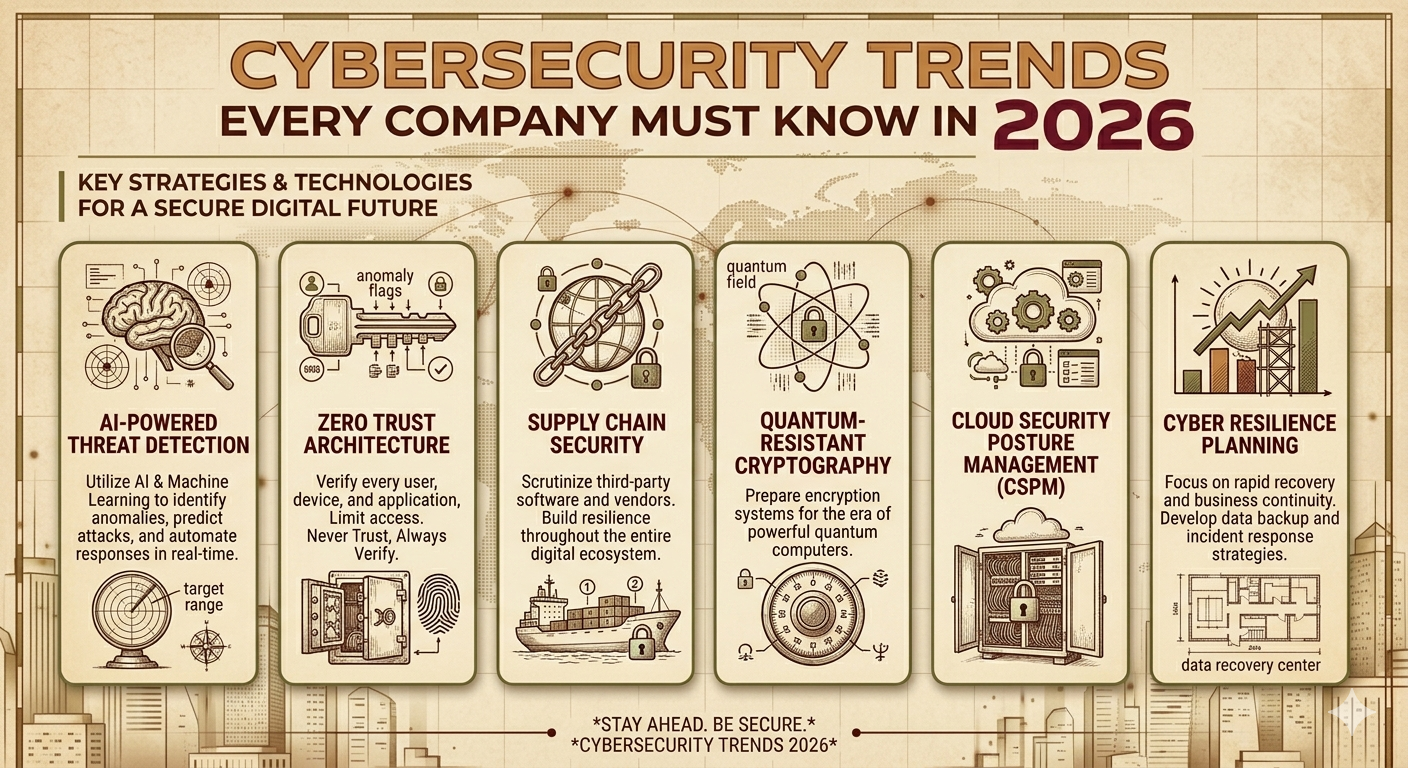
Cyber threats are evolving faster than ever, making cybersecurity a top priority for businesses of all sizes. As organizations continue to embrace cloud computing, artificial intelligence, remote work, and digital transformation, cybercriminals are finding new ways to exploit vulnerabilities.
At Newstook, we believe companies must adopt proactive cybersecurity strategies in 2026 to protect data, maintain customer trust, and stay ahead of evolving cyber threats.
This article explores the most important cybersecurity trends every company must know in 2026 and provides actionable insights to strengthen organizational security.
What Are Cybersecurity Trends?
Cybersecurity trends refer to emerging technologies, practices, and strategies that help organizations defend against modern cyber threats. These trends are influenced by changes in technology, attacker behavior, regulatory requirements, and business operations.
By staying informed about cybersecurity trends, companies can:
- Reduce security risks
- Prevent costly data breaches
- Improve compliance
- Protect customer information
- Strengthen business resilience
As cyber threats become more sophisticated, businesses must adapt their security strategies to remain protected.
Key Benefits of Following Cybersecurity Trends
Keeping up with cybersecurity developments offers several advantages.
Enhanced Threat Detection
Modern security tools can identify suspicious activities in real time, allowing organizations to respond before significant damage occurs.
Better Data Protection
Advanced encryption, authentication methods, and security frameworks help safeguard sensitive business information.
Improved Regulatory Compliance
Many industries must comply with strict security regulations. Staying updated helps businesses meet legal and compliance requirements.
Reduced Financial Losses
Cyberattacks can result in significant financial damage. Strong security measures reduce the risk of costly incidents.
Increased Customer Trust
Customers are more likely to do business with organizations that demonstrate strong cybersecurity practices.
Latest Cybersecurity Trends in 2026
1. AI-Powered Cybersecurity
Artificial intelligence is transforming cybersecurity by improving threat detection and response capabilities.
AI-powered security systems can:
- Analyze massive amounts of data
- Detect unusual behavior patterns
- Identify potential threats instantly
- Automate incident response
At the same time, cybercriminals are also using AI to launch more sophisticated attacks. This creates an ongoing race between attackers and defenders.
Example
Many organizations now use AI-driven Security Information and Event Management (SIEM) platforms to detect threats faster than traditional methods.
2. Rise of Zero Trust Security
The Zero Trust model continues to gain popularity in 2026.
The principle is simple:
“Never trust, always verify.”
Instead of automatically trusting users inside a network, organizations continuously verify identities and permissions.
Key Components
- Multi-factor authentication (MFA)
- Continuous monitoring
- Least-privilege access
- Device verification
Zero Trust significantly reduces the risk of insider threats and unauthorized access.
3. Cloud Security Becomes Critical
As businesses increasingly rely on cloud services, cloud security remains a major focus.
Organizations must secure:
- Cloud applications
- Cloud storage
- Virtual machines
- APIs
- Multi-cloud environments
Best Practices
- Encrypt sensitive data
- Conduct regular audits
- Monitor cloud activity
- Implement strong access controls
Cloud security investments are expected to continue growing throughout 2026.
4. Increased Focus on Ransomware Defense
Ransomware remains one of the most dangerous cyber threats.
Attackers are targeting businesses, healthcare providers, educational institutions, and government organizations.
Common Ransomware Tactics
- Phishing emails
- Malicious attachments
- Software vulnerabilities
- Supply chain attacks
Protection Strategies
- Frequent backups
- Employee training
- Endpoint protection
- Incident response planning
Organizations with strong recovery plans are better positioned to withstand ransomware attacks.
5. Cybersecurity Mesh Architecture
Cybersecurity Mesh Architecture (CSMA) is becoming a popular approach for distributed environments.
This framework allows security controls to operate independently while remaining interconnected.
Benefits
- Improved visibility
- Better scalability
- Faster threat response
- Stronger security across multiple locations
CSMA is particularly valuable for organizations with remote workers and hybrid infrastructures.
6. Stronger Identity and Access Management
Identity has become the new security perimeter.
Businesses are investing heavily in Identity and Access Management (IAM) solutions.
Emerging IAM Features
- Biometric authentication
- Adaptive authentication
- Passwordless login systems
- Behavioral analytics
These technologies help prevent unauthorized access and account compromise.
7. Supply Chain Security
Supply chain attacks continue to increase in sophistication.
Attackers often target vendors, software providers, or third-party services to gain access to larger organizations.
How Companies Can Improve Security
- Assess vendor risks regularly
- Require security certifications
- Monitor third-party access
- Implement strict security policies
Supply chain security has become a critical component of enterprise risk management.
8. Security Automation and Orchestration
Manual security processes are no longer sufficient.
Automation enables security teams to:
- Investigate threats faster
- Reduce response times
- Minimize human errors
- Improve operational efficiency
Security Orchestration, Automation, and Response (SOAR) platforms are becoming standard tools in modern cybersecurity operations.
9. Growing Importance of Cybersecurity Awareness Training
Human error remains one of the leading causes of data breaches.
Regular employee training helps organizations reduce risks related to:
- Phishing attacks
- Social engineering
- Weak passwords
- Unsafe browsing habits
Creating a security-conscious culture is one of the most effective ways to improve cybersecurity.
10. Regulatory Compliance and Data Privacy
Governments worldwide continue introducing stricter privacy regulations.
Organizations must comply with evolving requirements related to:
- Data collection
- Data storage
- User consent
- Breach reporting
FAQs
What is the biggest cybersecurity trend in 2026?
AI-powered cybersecurity and Zero Trust security models are among the most significant trends shaping the industry in 2026.
Why is Zero Trust important?
Zero Trust continuously verifies users and devices, reducing the risk of unauthorized access and insider threats.
How can companies prevent ransomware attacks?
Businesses can reduce ransomware risks through employee training, regular backups, endpoint protection, and timely software updates.
What role does AI play in cybersecurity?
AI helps detect threats faster, automate responses, and analyze large volumes of security data in real time.
Why is cybersecurity awareness training necessary?
Employees are often targeted by phishing and social engineering attacks. Training helps them recognize and avoid these threats.
Conclusion
Cybersecurity in 2026 is more complex and important than ever before. From AI-powered defense systems and Zero Trust architectures to cloud security and ransomware protection, organizations must stay ahead of rapidly evolving threats.
By understanding the latest cybersecurity trends, implementing best practices, and fostering a strong security culture, businesses can protect their assets, maintain compliance, and build lasting customer trust. Companies that invest in cybersecurity today will be better prepared to face tomorrow’s digital challenges and secure long-term success.
