


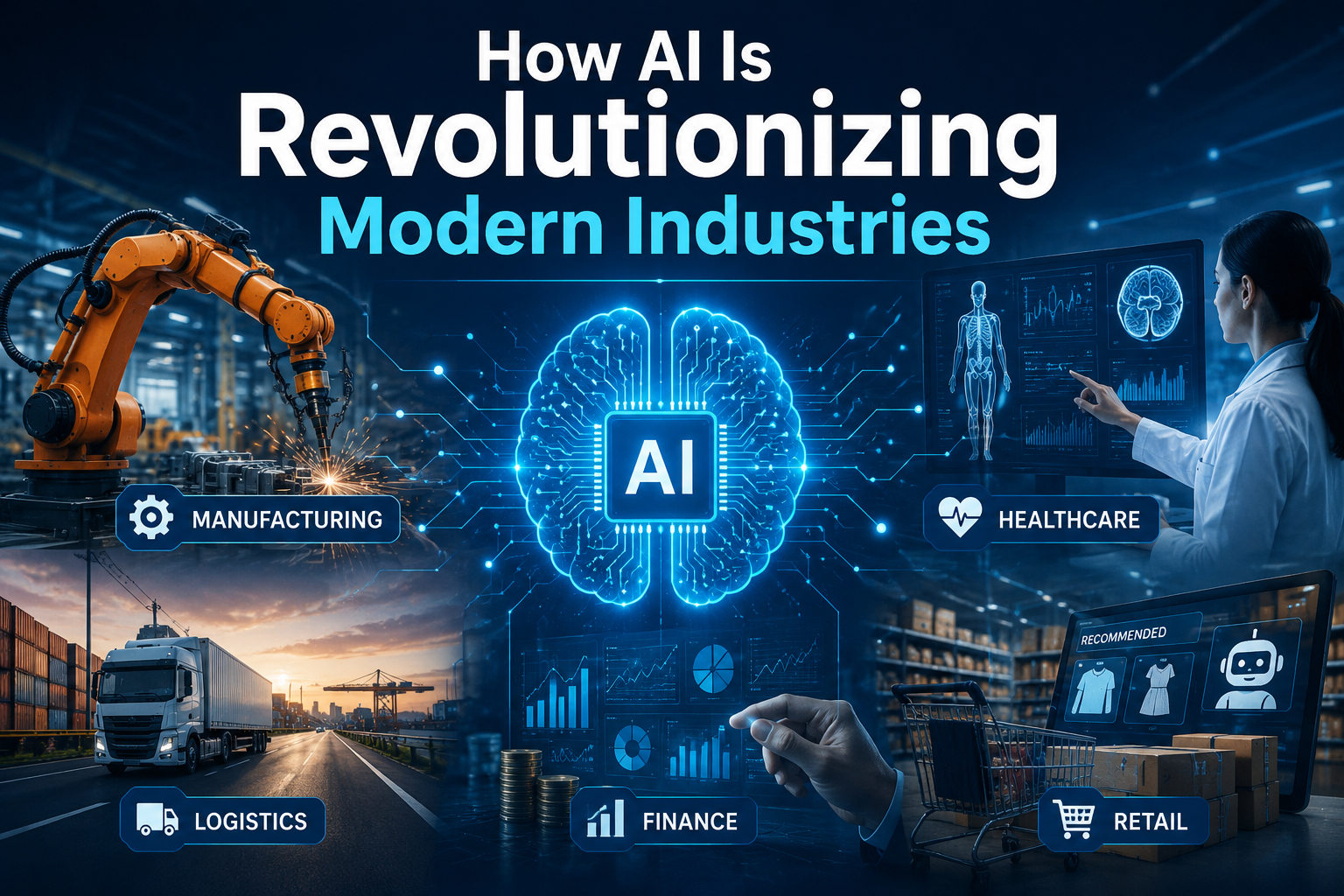
Artificial Intelligence (AI) has rapidly evolved from a futuristic concept into a powerful technology that is reshaping industries across the globe. From healthcare and finance to manufacturing and retail, AI is helping organizations improve efficiency, reduce costs, and make smarter decisions. As businesses continue to embrace digital transformation, AI has become a critical tool for staying competitive in an increasingly data-driven world.
In 2026, artificial intelligence is no longer limited to large technology companies. Businesses of all sizes are leveraging AI-powered solutions to automate repetitive tasks, enhance customer experiences, and unlock valuable insights from massive datasets.
Artificial intelligence is reshaping the way businesses operate, innovate, and compete. In this comprehensive guide, NewsTok examines how AI is revolutionizing modern industries, from healthcare and finance to retail and manufacturing, while exploring the latest trends, benefits, challenges, and future possibilities of this game-changing technology.
What Is Artificial Intelligence?
Artificial Intelligence refers to computer systems designed to perform tasks that typically require human intelligence. These tasks include learning, reasoning, problem-solving, language understanding, decision-making, and visual perception.
AI technologies often include:
- Machine Learning (ML)
- Deep Learning
- Natural Language Processing (NLP)
- Computer Vision
- Robotics
- Predictive Analytics
By analyzing vast amounts of data, AI systems can identify patterns, make predictions, and continuously improve their performance over time.
Key Benefits and Features of Artificial Intelligence
Increased Efficiency
AI automates repetitive and time-consuming tasks, allowing employees to focus on more strategic work. Automation reduces errors and increases productivity across various departments.
Better Decision-Making
Organizations use AI-powered analytics tools to gain actionable insights from data. This helps business leaders make informed decisions based on real-time information.
Enhanced Customer Experience
AI-driven chatbots, virtual assistants, and recommendation systems provide personalized customer interactions and support around the clock.
Cost Reduction
Automating workflows and optimizing operations can significantly reduce operational costs while improving overall efficiency.
Improved Accuracy
AI algorithms can process and analyze data with remarkable precision, minimizing human errors in industries such as healthcare, finance, and manufacturing.
Scalability
AI solutions can easily scale with business growth, making them valuable for organizations of all sizes.
How AI Is Transforming Major Industries
Healthcare
The healthcare industry has experienced significant advancements through AI technologies.
Applications of AI in Healthcare
- Medical image analysis
- Disease diagnosis
- Drug discovery
- Personalized treatment plans
- Virtual health assistants
AI-powered systems help doctors detect diseases earlier and improve patient outcomes. Predictive analytics can identify health risks before symptoms become severe.
Finance
Financial institutions rely heavily on AI to improve security, efficiency, and customer service.
AI Uses in Finance
- Fraud detection
- Risk assessment
- Automated trading
- Credit scoring
- Customer support chatbots
Banks and financial organizations use AI to analyze transaction patterns and identify suspicious activities in real time.
Manufacturing
Manufacturers are leveraging AI to optimize production processes and reduce downtime.
Key Benefits in Manufacturing
- Predictive maintenance
- Quality control
- Supply chain optimization
- Robotics automation
- Demand forecasting
Smart factories equipped with AI technologies can monitor equipment performance and predict failures before they occur.
Retail and E-Commerce
AI is transforming how businesses engage with customers and manage inventory.
AI Applications in Retail
- Personalized recommendations
- Inventory management
- Dynamic pricing
- Customer behavior analysis
- Virtual shopping assistants
Major e-commerce platforms use AI algorithms to recommend products based on browsing and purchasing history.
Transportation and Logistics
The transportation sector is embracing AI to improve efficiency and safety.
Examples Include
- Autonomous vehicles
- Route optimization
- Fleet management
- Predictive maintenance
- Traffic management systems
AI-driven logistics platforms help companies reduce delivery times and fuel consumption.
Education
Educational institutions are adopting AI to personalize learning experiences.
AI in Education
- Intelligent tutoring systems
- Personalized learning paths
- Automated grading
- Student performance analytics
- Virtual learning assistants
These technologies help educators provide more effective and customized instruction.
Latest AI Trends in 2026
Generative AI Expansion
Generative AI tools continue to create text, images, videos, and code, enabling businesses to streamline content creation and creative workflows.
AI-Powered Cybersecurity
Organizations are increasingly using AI to detect threats, monitor networks, and respond to cyberattacks faster than traditional systems.
Explainable AI
Businesses demand greater transparency in AI decision-making processes, leading to the rise of explainable AI solutions.
Edge AI
Processing AI data closer to devices reduces latency and improves performance in applications such as IoT and smart devices.
AI and Sustainability
Companies are utilizing AI to optimize energy consumption, reduce waste, and support sustainability initiatives.
Human-AI Collaboration
Rather than replacing workers, AI is increasingly being used to augment human capabilities and improve workplace productivity.
Challenges and Solutions
Data Privacy Concerns
Challenge
AI systems require large amounts of data, raising concerns about privacy and security.
Solution
Implement strong data governance policies and comply with regulations to protect user information.
Bias in AI Models
Challenge
AI algorithms may produce biased results if trained on biased datasets.
Solution
Use diverse datasets and regularly audit AI systems for fairness and accuracy.
High Implementation Costs
Challenge
Developing and deploying AI solutions can be expensive.
Solution
Start with small pilot projects and scale gradually based on measurable results.
Skills Gap
Challenge
Many organizations struggle to find qualified AI professionals.
Solution
Invest in employee training and partner with AI experts and technology providers.
Best Practices for AI Adoption
To maximize the benefits of artificial intelligence, organizations should follow these best practices:
- Define clear business objectives.
- Start with high-impact use cases.
- Ensure high-quality data collection.
- Focus on ethical AI development.
- Monitor performance continuously.
- Train employees to work alongside AI systems.
- Prioritize cybersecurity and compliance.
- Measure ROI regularly.
By following these strategies, businesses can achieve successful AI implementation and long-term growth.
Future Outlook
The future of artificial intelligence looks incredibly promising. As AI technologies become more advanced and accessible, organizations will continue integrating intelligent systems into everyday operations.
Future developments may include:
- More sophisticated autonomous systems
- Advanced healthcare diagnostics
- Smarter cities and infrastructure
- Enhanced workplace automation
- Improved human-machine collaboration
Businesses that embrace AI innovation today will be better positioned to compete and thrive in the digital economy of tomorrow.
FAQs
What industries benefit the most from artificial intelligence?
Healthcare, finance, manufacturing, retail, transportation, and education are among the industries experiencing the greatest benefits from AI adoption.
Can AI replace human workers?
AI is primarily designed to automate repetitive tasks and enhance productivity. In most cases, it complements human workers rather than completely replacing them.
Is artificial intelligence expensive to implement?
Costs vary depending on the project scope. Many cloud-based AI solutions make adoption more affordable for small and medium-sized businesses.
What are the biggest risks of AI?
Data privacy concerns, algorithmic bias, cybersecurity threats, and lack of transparency are among the primary challenges associated with AI.
What is the future of AI in business?
AI will continue driving automation, improving decision-making, enhancing customer experiences, and creating new business opportunities across industries.
Conclusion
Artificial intelligence is revolutionizing modern industries by transforming how organizations operate, innovate, and serve their customers. From improving healthcare outcomes and enhancing financial security to optimizing manufacturing processes and personalizing retail experiences, AI is delivering significant value across sectors.
As technology continues to advance, businesses that strategically adopt AI solutions will gain a competitive advantage and unlock new growth opportunities. By addressing challenges responsibly and following best practices, organizations can harness the full potential of artificial intelligence and thrive in the rapidly evolving digital landscape.
